The Eagle Nebula
Cluster and emission nebula
≈ 7,000 light-years away, in the constellation Serpens. Binoculars.
1Overview
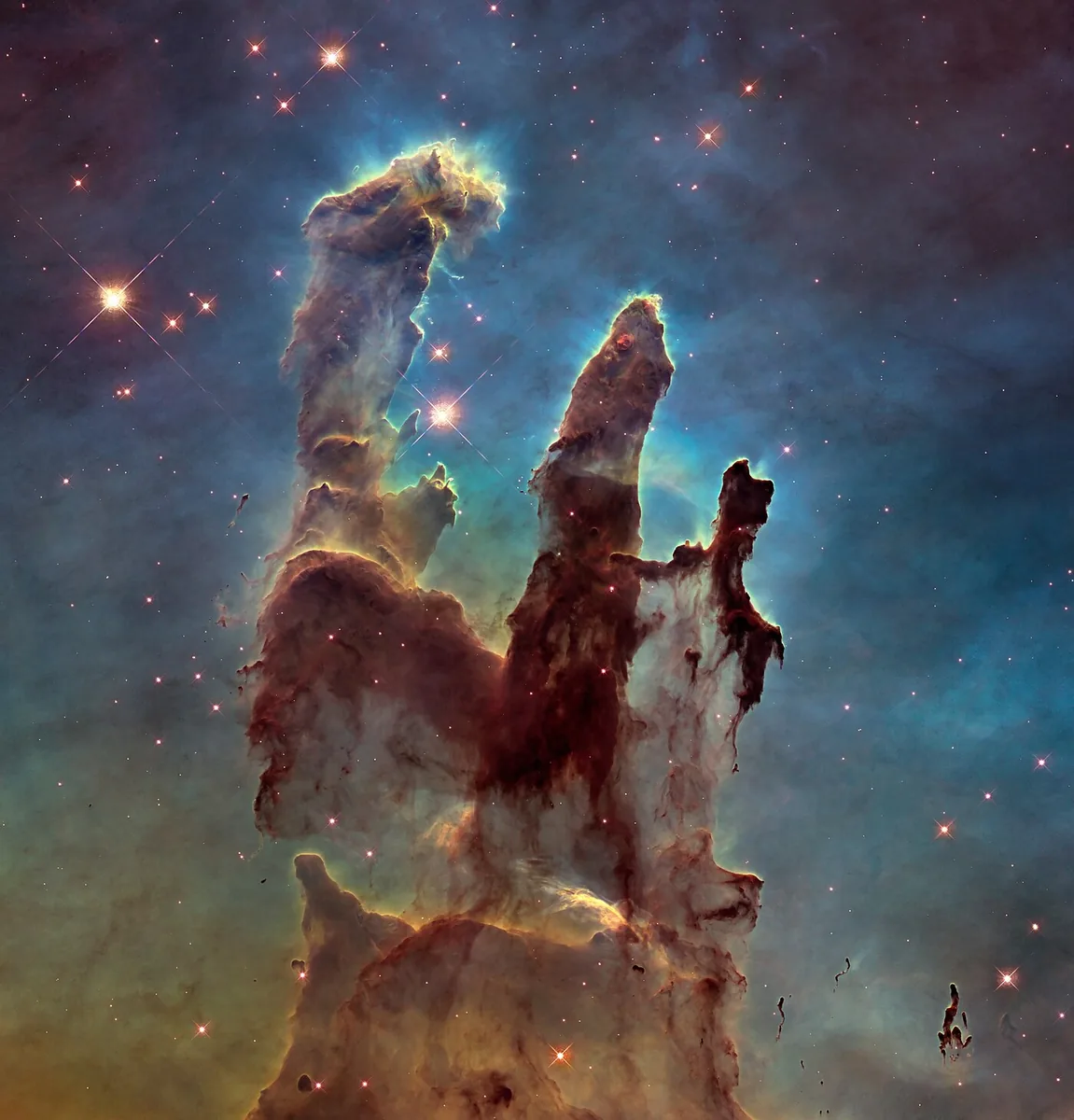
The Eagle Nebula (M16), in the Tail of Serpens, is a young star cluster wrapped in a cloud of gas. It became famous in 1995 thanks to a photograph by the Hubble Space Telescope: the “Pillars of Creation”, three columns of gas and dust several light-years tall, sculpted by the radiation of nearby stars.
At the tops of the pillars, stars are being born in cocoons of matter. The James Webb telescope photographed them again in 2022, in infrared light that pierces the dust. The whole region lies about 7,000 light-years away. In binoculars you see the cluster and a faint glow; the pillars only show up in photographs.
2How to find it
Finder chart drawn by CarteDuCiel.eu: the object is circled in orange. North up, east left.
Working it out…
3When to observe it
From mid-northern latitudes (46° N), the best time to observe it is in the evening in July, when it culminates 30° above the horizon. Choose a moonless night, away from lights.
 The Lagoon Nebula
 The Trifid Nebula
 The Carina Nebula
 The Andromeda Galaxy