CarteduCiel.eu
FR

Bode’s Galaxy

Spiral galaxy

≈ 12 million light-years away, in the constellation Ursa Major. Binoculars.
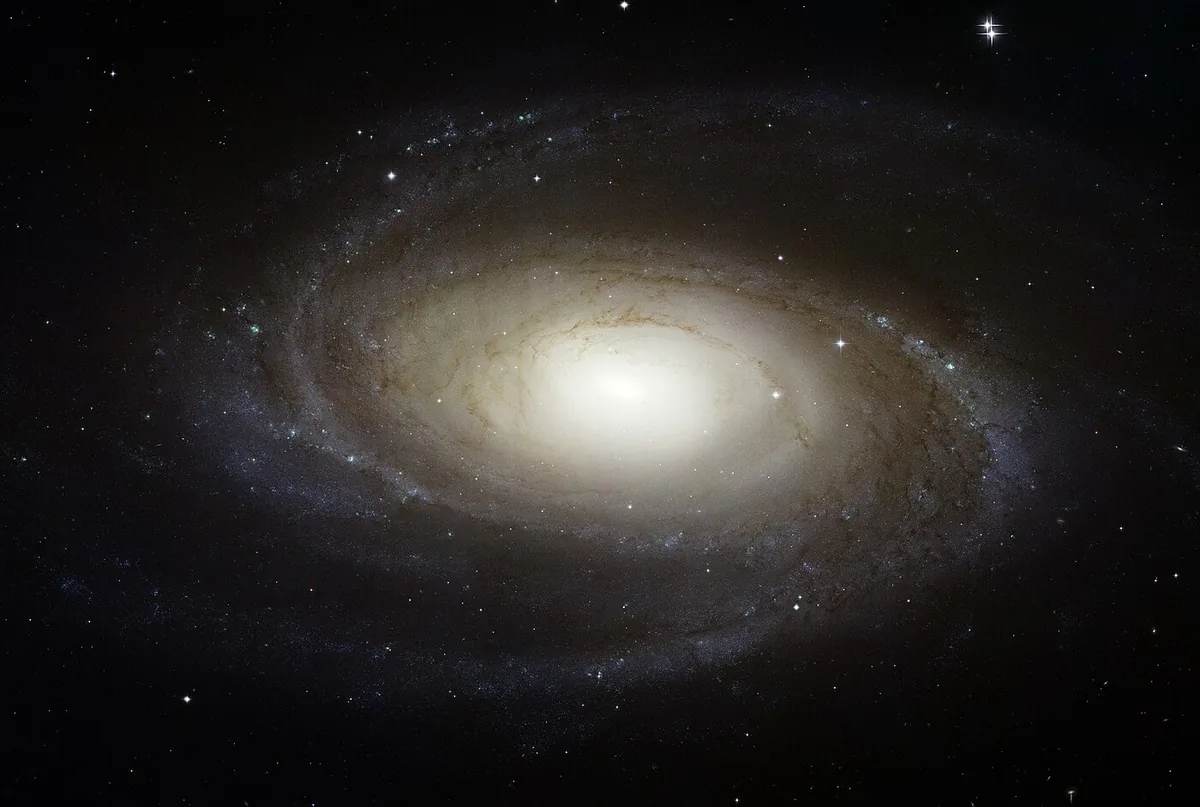
Ursa MajorM81NGC 3031
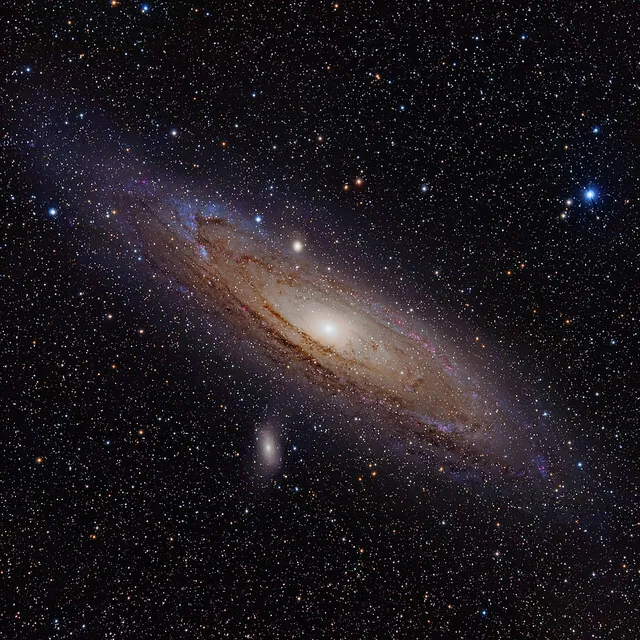
Photograph: Bode’s Galaxy
Photo: NASA, ESA and The Hubble Heritage Team (STScI/AURA) · public domain · Wikimedia Commons · cropped and resized

1Overview

Bode’s Galaxy (M81), in Ursa Major, is one of the easiest galaxies to observe: under a dark sky, good binoculars show it as a small oval patch. It is named after the German astronomer Johann Elert Bode, who discovered it in 1774.

It is a large spiral with well-defined arms, about 12 million light-years away. Right next to it lies the Cigar Galaxy (M82), seen edge-on: the two galaxies brushed past each other a few hundred million years ago. M82 was thrown into turmoil and has been forming stars at a frantic rate ever since; jets of red gas stream out of its centre.

2How to find it

M81Intercrus · magnitude 5.40Chalawan, 47 UMa · magnitude 5.03Alula Australis B, ξ UMa · magnitude 4.80π² UMa · magnitude 4.59φ UMa · magnitude 4.5524 UMa · magnitude 4.5426 UMa · magnitude 4.4715 UMa · magnitude 4.46Alula Australis, ξ UMa · magnitude 4.33Alcor, 80 UMa · magnitude 3.99ζ UMa · magnitude 3.95υ UMa · magnitude 3.78Taiyangshou, χ UMa · magnitude 3.6923 UMa · magnitude 3.65Alkaphrah, κ UMa · magnitude 3.57Alula Borealis, ν UMa · magnitude 3.49Tania Borealis, λ UMa · magnitude 3.45Muscida, ο UMa · magnitude 3.35Megrez, δ UMa · magnitude 3.32θ UMa · magnitude 3.17Talitha, ι UMa · magnitude 3.12Tania Australis, μ UMa · magnitude 3.06ψ UMa · magnitude 3.00Phecda, γ UMa · magnitude 2.41Merak, β UMa · magnitude 2.34Mizar, ζ UMa · magnitude 2.23Alkaid, η UMa · magnitude 1.85Dubhe, α UMa · magnitude 1.81Alioth, ε UMa · magnitude 1.76M81AliothDubheAlkaidMizarMerakPhecdaψμιθδολνχυξφπ²CANES VENATICICOMA BERENICESLEO MINORNWES

Finder chart drawn by CarteDuCiel.eu: the object is circled in orange. North up, east left.

Where to see it tonight?
Working it out…

3When to observe it

From mid-northern latitudes (46° N), the best time to observe it is in the evening in March, when it culminates 90° above the horizon. Choose a moonless night, away from lights.
0°30°60°90°JanFebMarAprMayJunJulAugSepOctNovDecMid-northern (46° N) · January : 51°Mid-northern (46° N) · February : 62°Mid-northern (46° N) · March : 67°Mid-northern (46° N) · April : 64°Mid-northern (46° N) · May : 55°Mid-northern (46° N) · June : 44°Mid-northern (46° N) · July : 35°Mid-northern (46° N) · August : 28°Mid-northern (46° N) · September : 25°Mid-northern (46° N) · October : 27°Mid-northern (46° N) · November : 32°Mid-northern (46° N) · December : 41°Mid-southern (34° S) · January : -23°Mid-southern (34° S) · February : -16°Mid-southern (34° S) · March : -13°Mid-southern (34° S) · April : -15°Mid-southern (34° S) · May : -21°Mid-southern (34° S) · June : -30°Mid-southern (34° S) · July : -40°Mid-southern (34° S) · August : -50°Mid-southern (34° S) · September : -55°Mid-southern (34° S) · October : -52°Mid-southern (34° S) · November : -44°Mid-southern (34° S) · December : -33°Mid-northern (46° N)Mid-southern (34° S)horizon

4Also worth seeing