The Ring Nebula
Planetary nebula
≈ 2,300 light-years away, in the constellation Lyra. With a telescope.
1Overview
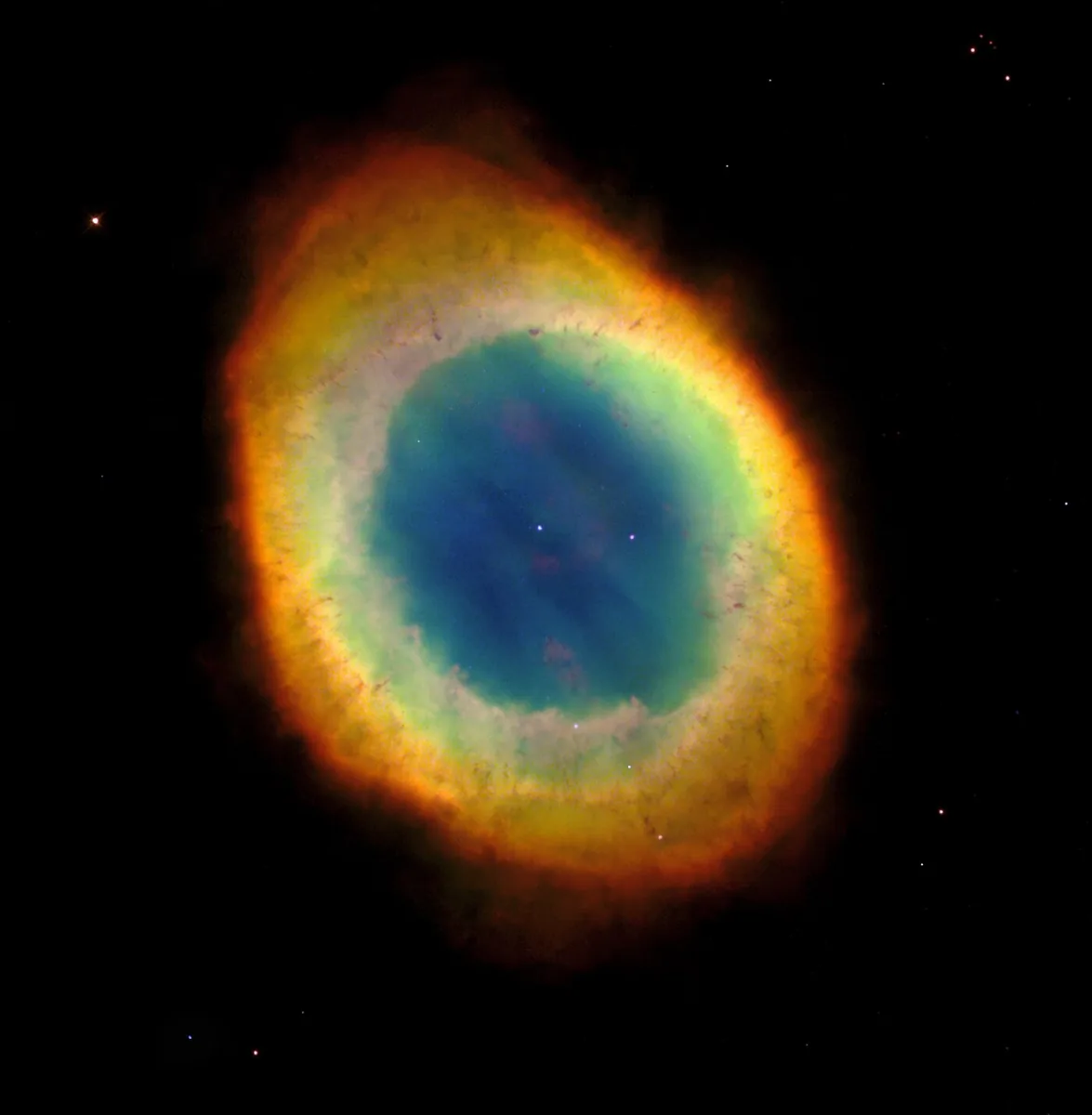
The Ring Nebula (M57), in Lyra, is one of the most famous planetary nebulae. In a small telescope, between the stars Beta and Gamma Lyrae, it looks like a tiny grey-green smoke ring.
Despite its name, a planetary nebula has nothing to do with planets: it is the shell of gas thrown off by a star like the Sun at the end of its life. At the centre, the leftover core of the star, a very hot white dwarf, lights up this shell of gas. Photographs show a coloured ring, red outside and blue-green inside, seen almost face-on, about 2,300 light-years away.
It was discovered in 1779 by Antoine Darquier de Pellepoix of Toulouse, a few days before Charles Messier.
2How to find it
Finder chart drawn by CarteDuCiel.eu: the object is circled in orange. North up, east left.
Working it out…
3When to observe it
From mid-northern latitudes (46° N), the best time to observe it is in the evening in August, when it culminates 77° above the horizon. Choose a moonless night, away from lights.
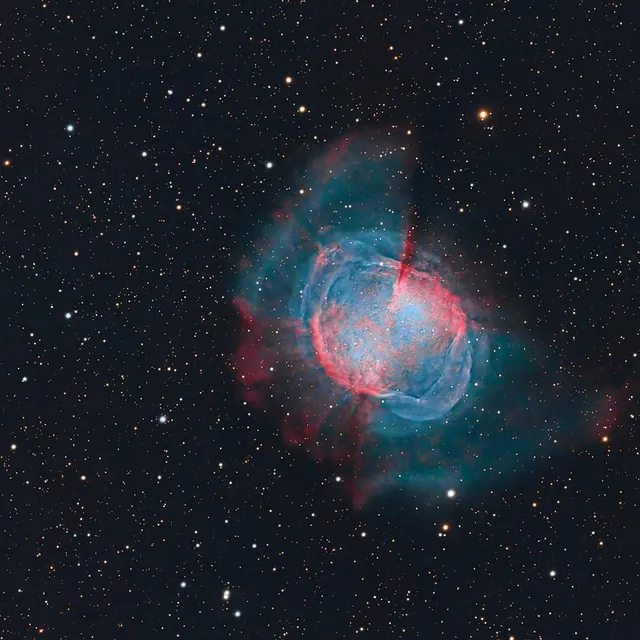 The Dumbbell Nebula
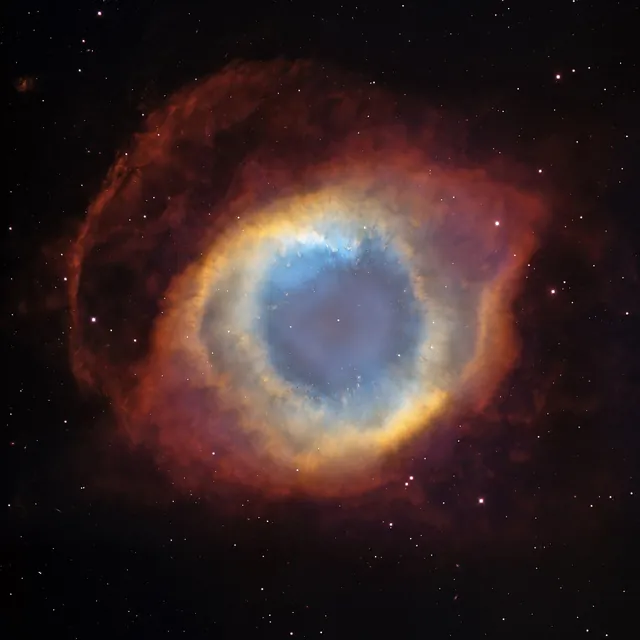 The Helix Nebula
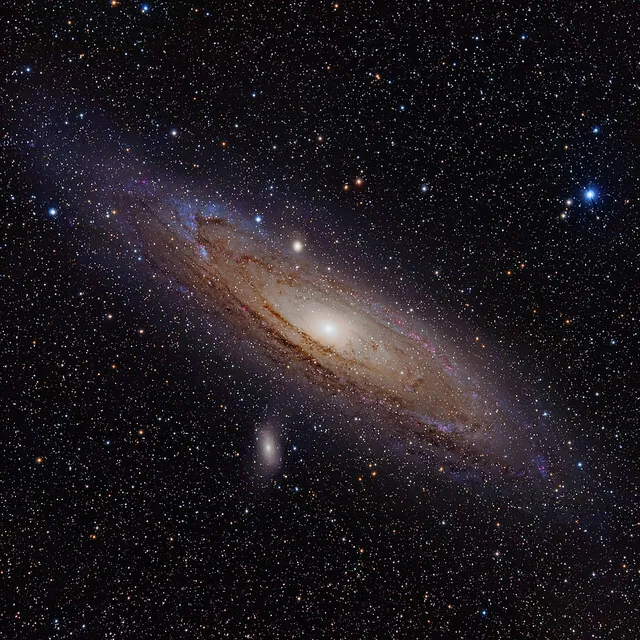 The Andromeda Galaxy
 The Orion Nebula