1Overview
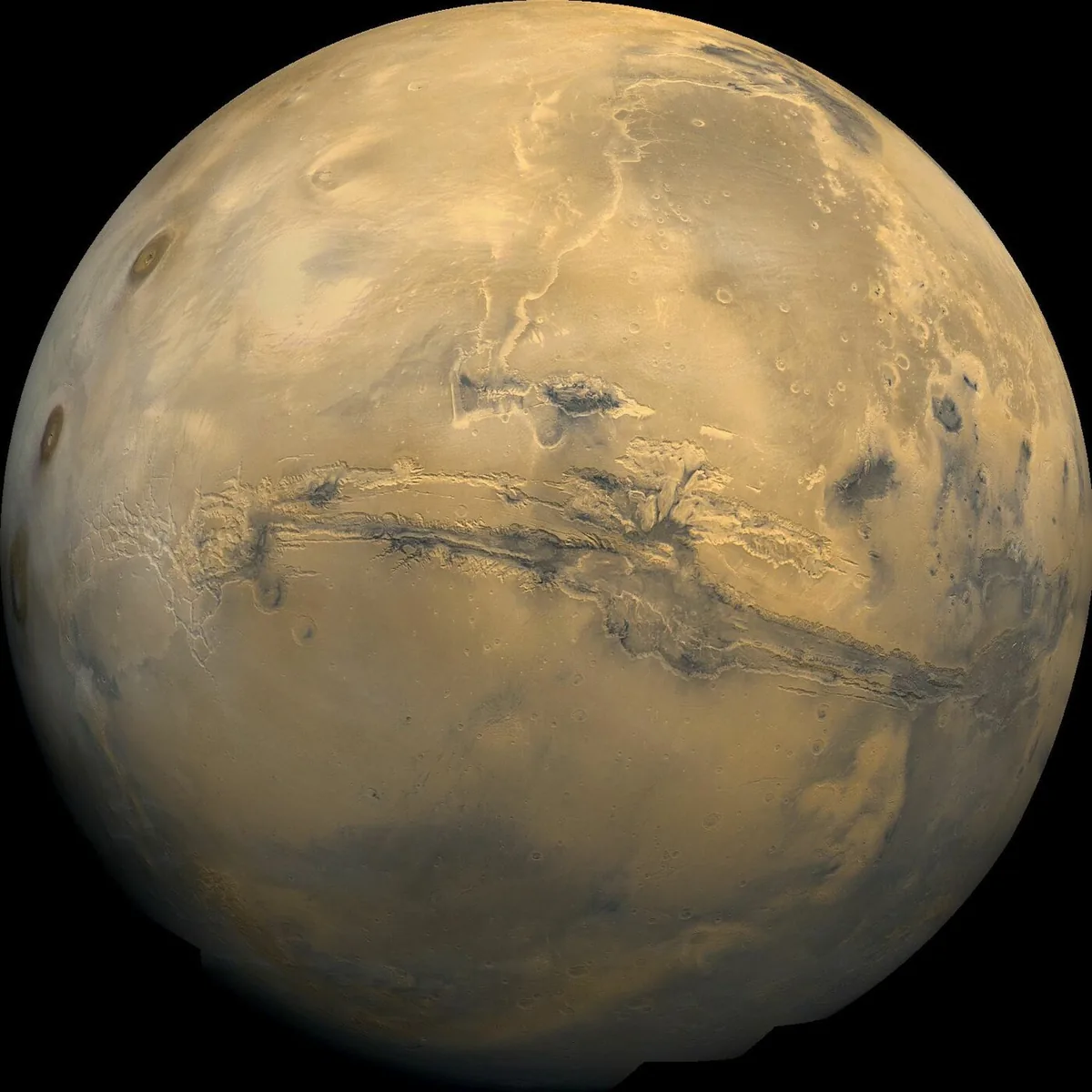
Mars, the red planet, owes its colour to rust: iron oxide coats its rocks and dust. Half the size of the Earth, it has a very thin atmosphere of carbon dioxide and an average temperature of −63 °C. Its days last 24 hours and 37 minutes, and its axis is tilted almost like the Earth’s: so it has seasons.
Mars has the largest volcano in the Solar System, Olympus Mons, about 22 km high, and a canyon 4,000 km long, Valles Marineris. Its polar caps contain water ice, and traces of ancient rivers and lakes show that liquid water flowed there billions of years ago. Did it ever host life? It is one of the great questions of space exploration.
2Observing it
Working it out…
Mars shines like an orange star that hardly twinkles. Its brightness varies a lot: about every 26 months the Earth overtakes it as they circle the Sun; this is “opposition”, when Mars becomes very bright and visible all night. In a telescope you can make out a polar cap and dark markings. The “Tonight” page shows its position.
3Exploration
Mars is the most explored planet after the Earth. The rovers Sojourner, Spirit, Opportunity, Curiosity and Perseverance (with the Ingenuity helicopter, the first craft to fly on another planet, in 2021) have driven across it, as has China’s Zhurong. Perseverance is collecting rock samples that may one day be brought back to Earth.
4Other Solar System bodies
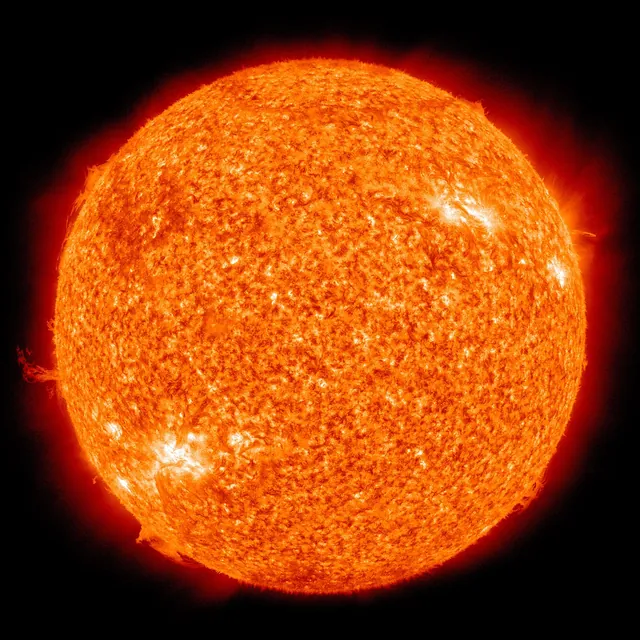 Sunstar
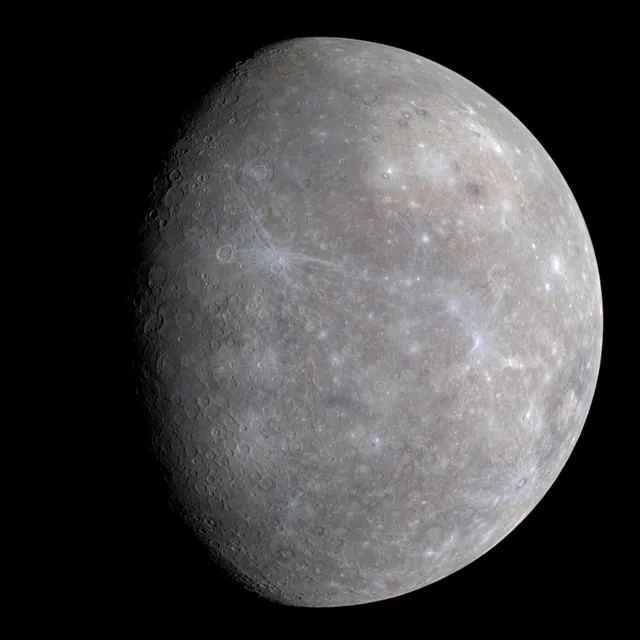 Mercuryrocky planet
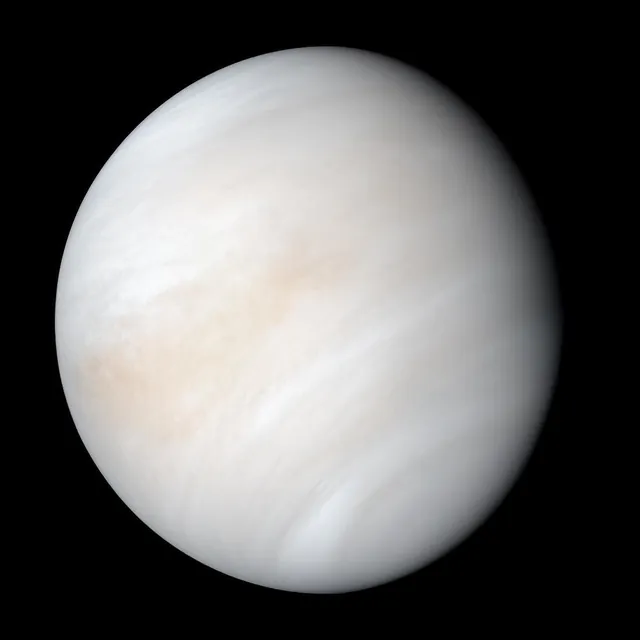 Venusrocky planet
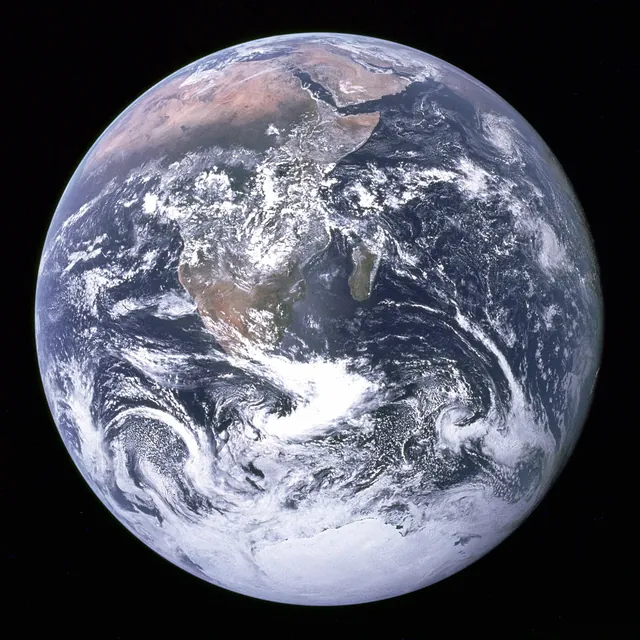 Earthrocky planet
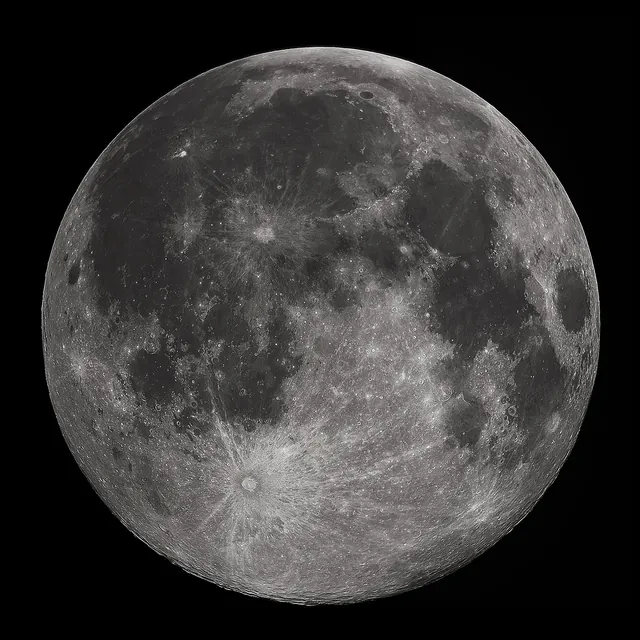 MoonEarth’s natural satellite
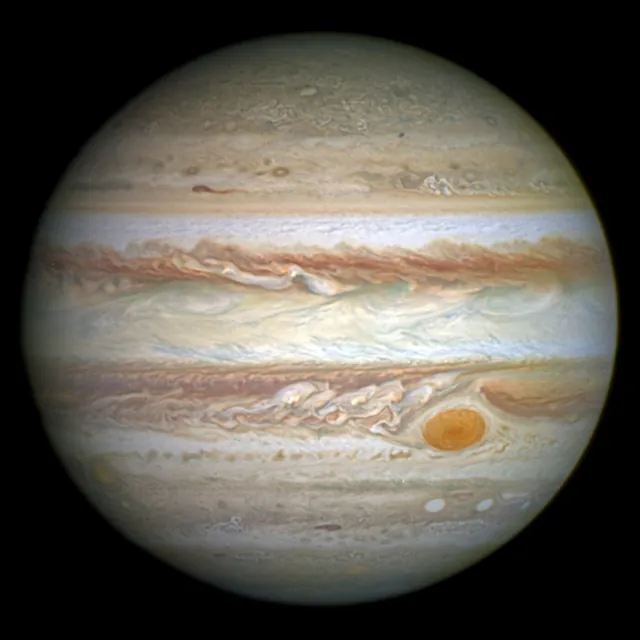 Jupitergas giant planet
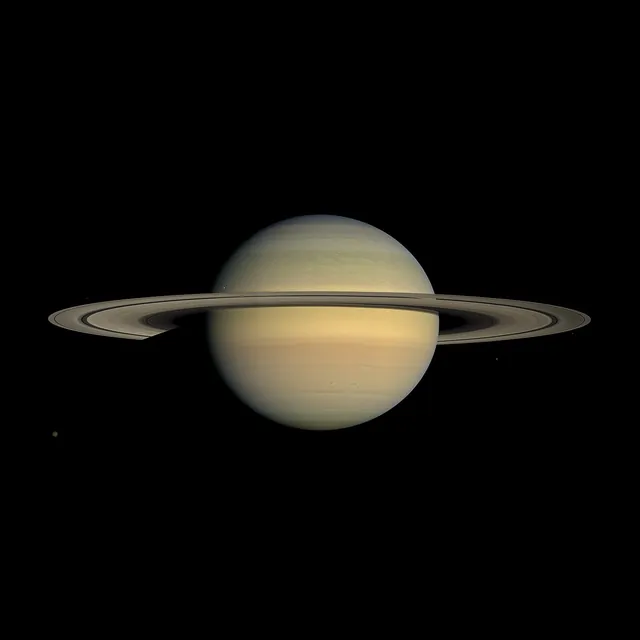 Saturngas giant planet
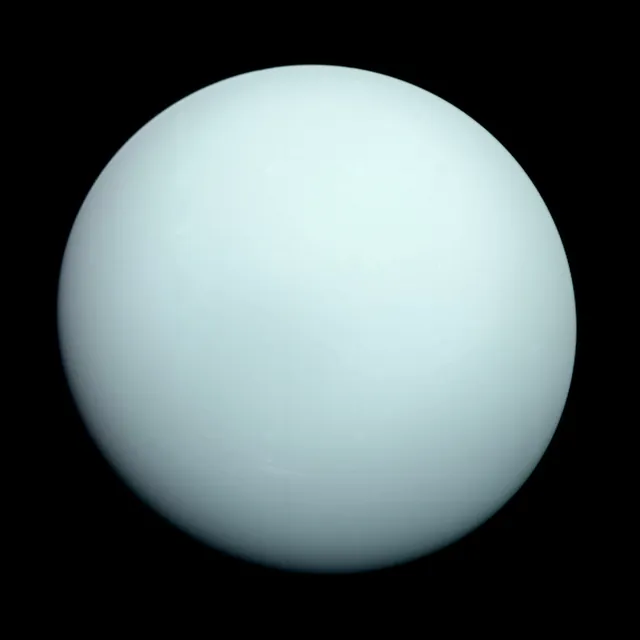 Uranusice giant planet
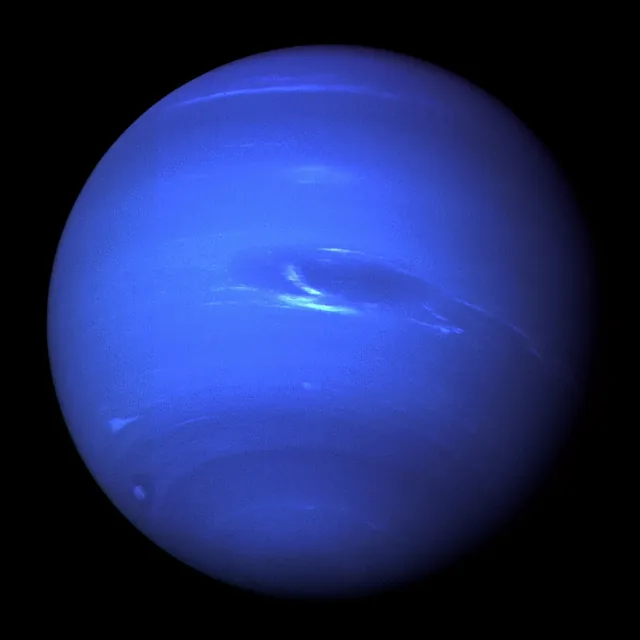 Neptuneice giant planet
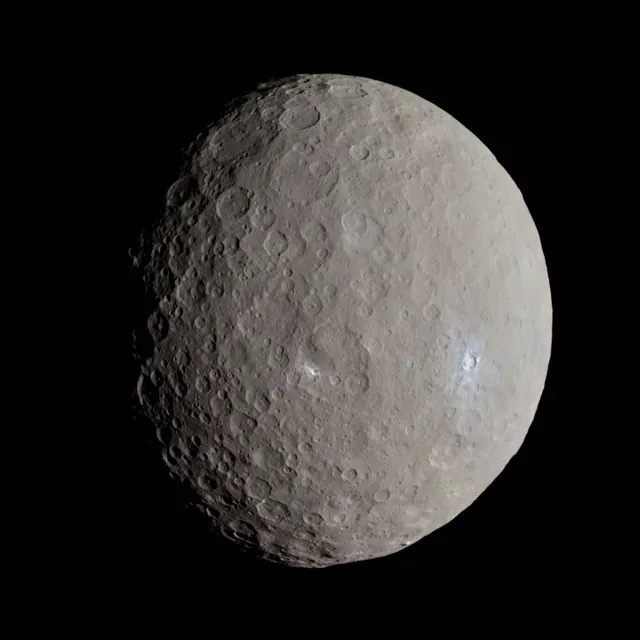 Ceresdwarf planet in the asteroid belt
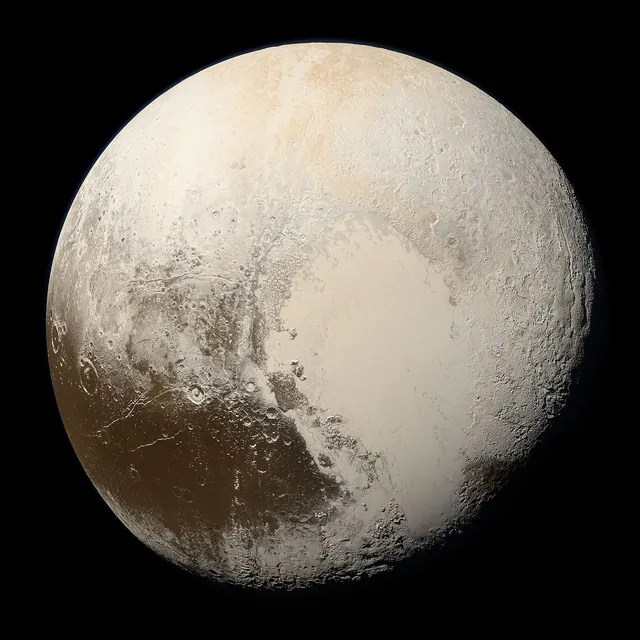 Plutodwarf planetHaumeaelongated dwarf planetMakemakedistant dwarf planetErisdistant dwarf planet