1Overview
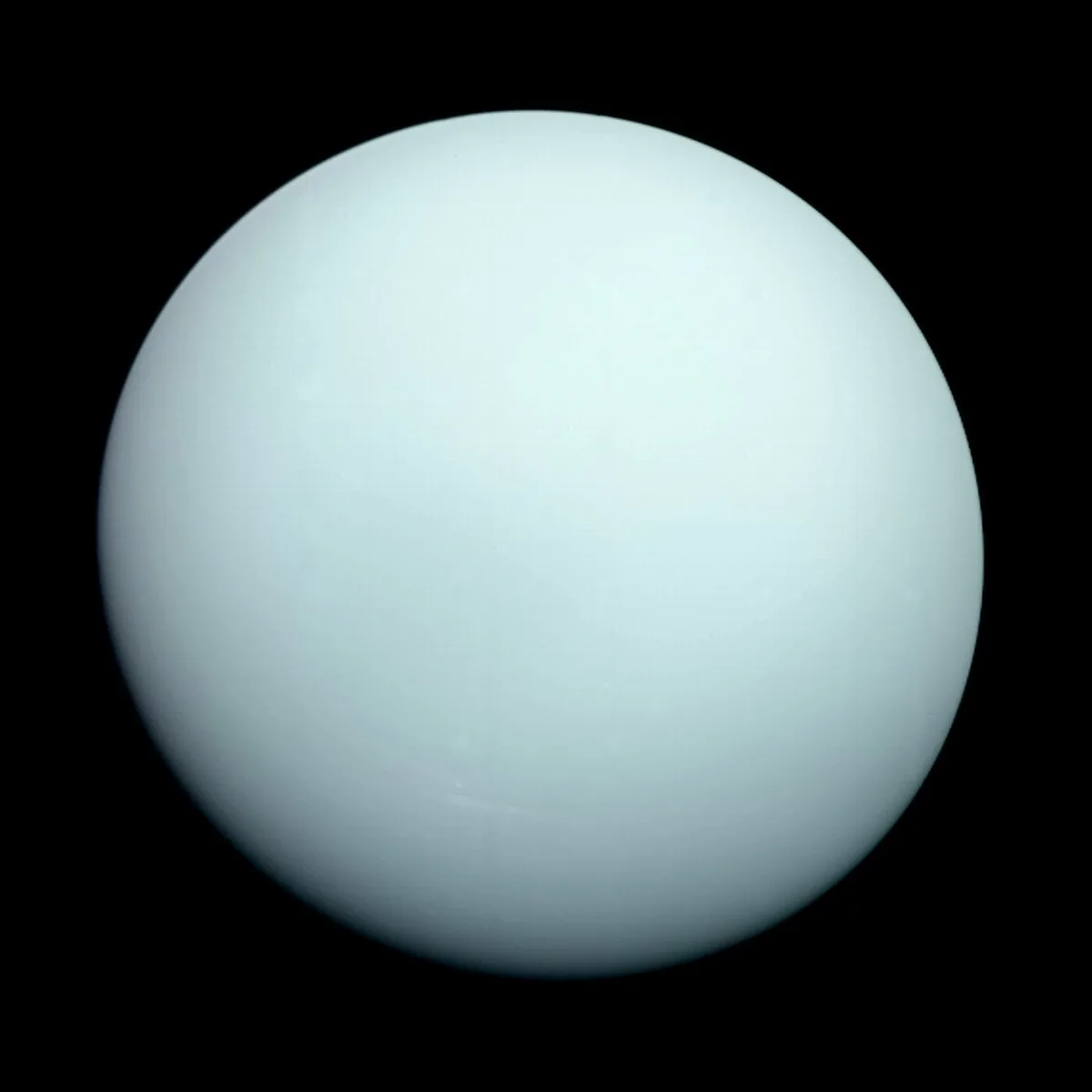
Uranus is an “ice giant”: beneath an atmosphere of hydrogen, helium and methane, which gives it its blue-green tint, it hides a thick mantle of very hot, compressed water, ammonia and methane. Its peculiarity is spectacular: its axis is tipped over at 98°. It rolls along its orbit like a marble, so that each pole has 42 years of daylight followed by 42 years of night.
A giant collision billions of years ago is thought to have knocked it over. Uranus has thin dark rings and at least 28 moons, named after characters from Shakespeare and Alexander Pope, such as Titania, Oberon and Miranda.
2Observing it
Working it out…
Uranus is at the limit of naked-eye vision (magnitude 5.7): under a very dark sky, and knowing exactly where to look, you can glimpse it. In binoculars it is a small “star”; in a telescope, a tiny blue-green disc. The “Tonight” page and the sky map show its position.
3Exploration
Uranus was discovered on 13 March 1781 by William Herschel, from his garden in Bath, England: it was the first planet discovered with a telescope. Only one probe has visited it: Voyager 2, in January 1986. Space agencies are studying a future mission to this little-known planet.
4Other Solar System bodies
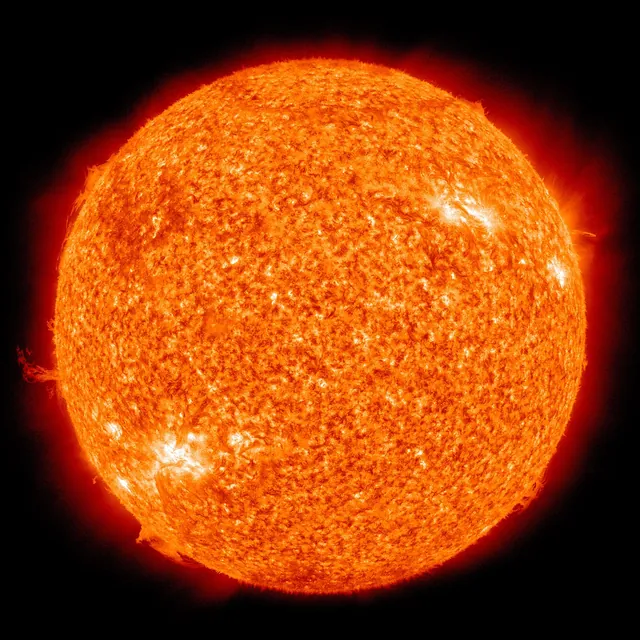 Sunstar
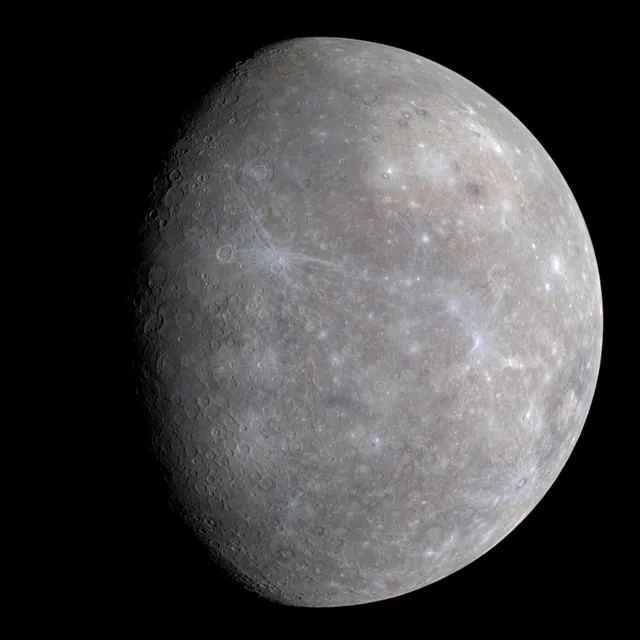 Mercuryrocky planet
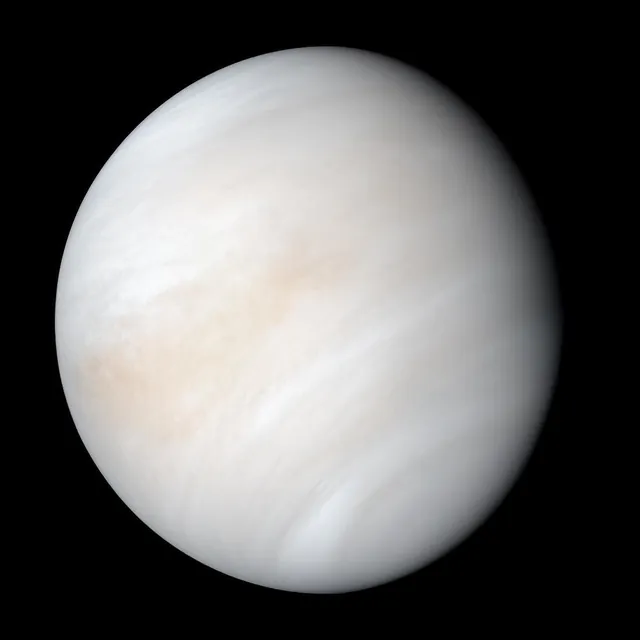 Venusrocky planet
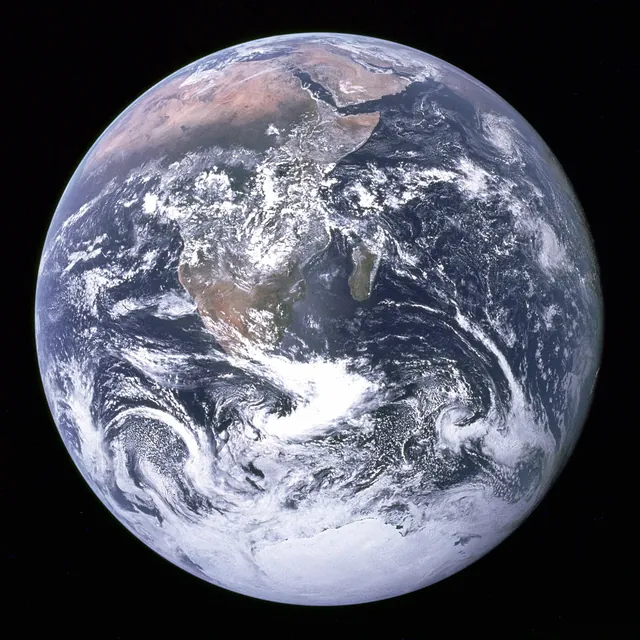 Earthrocky planet
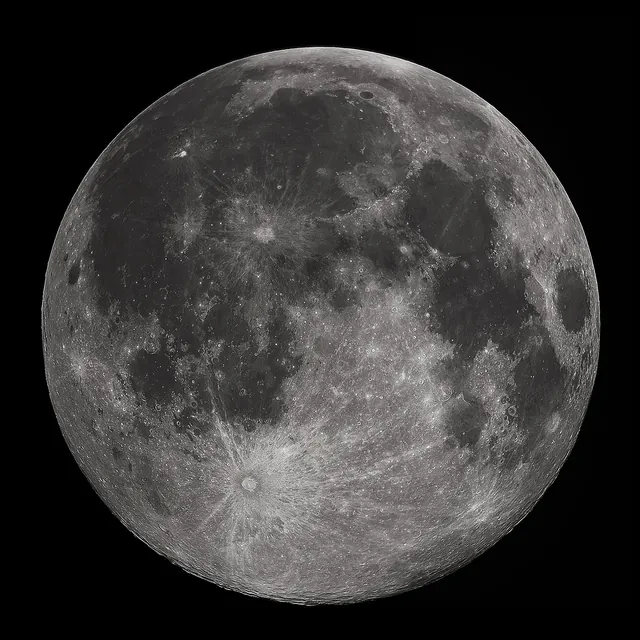 MoonEarth’s natural satellite
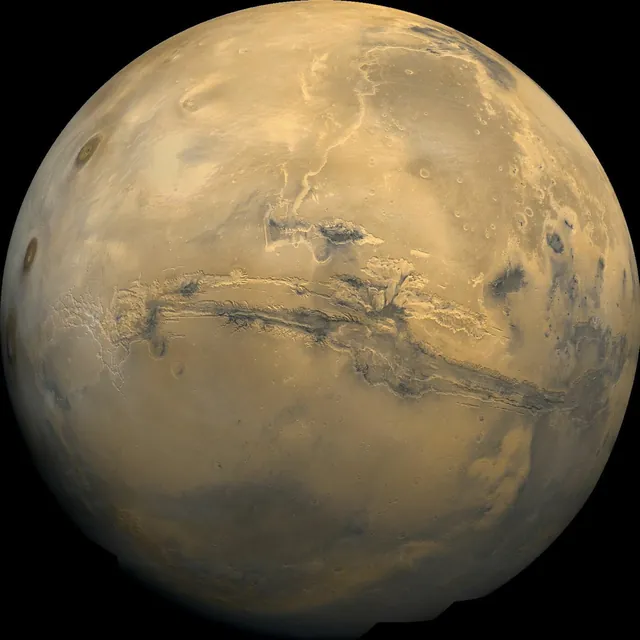 Marsrocky planet
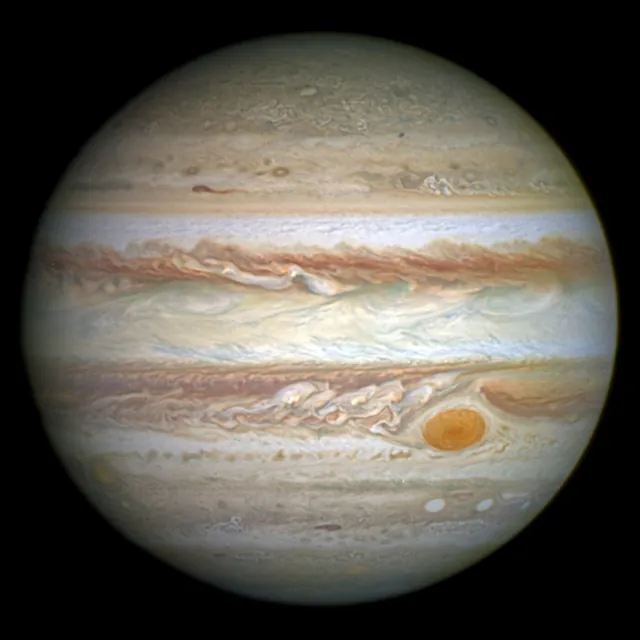 Jupitergas giant planet
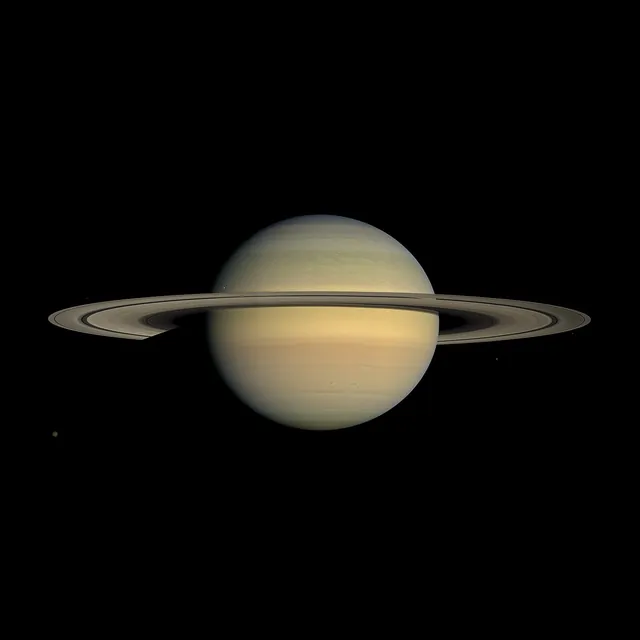 Saturngas giant planet
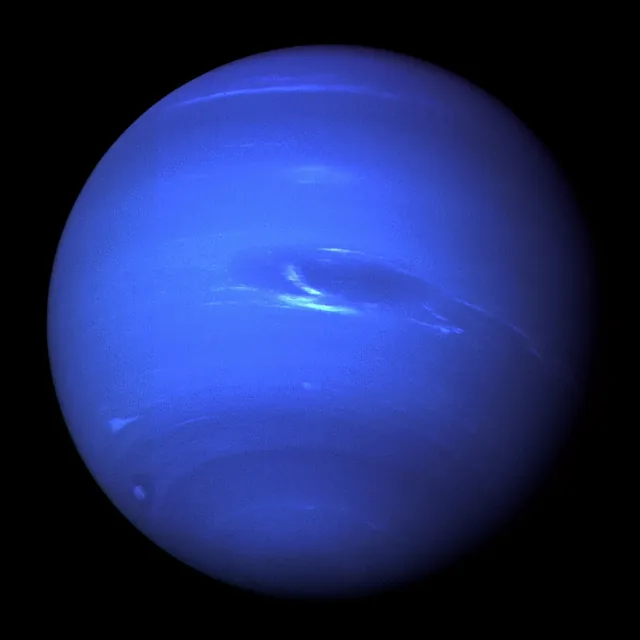 Neptuneice giant planet
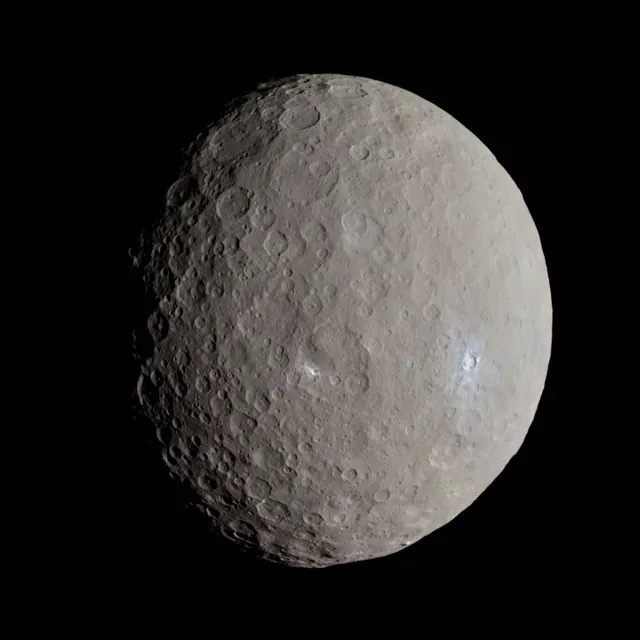 Ceresdwarf planet in the asteroid belt
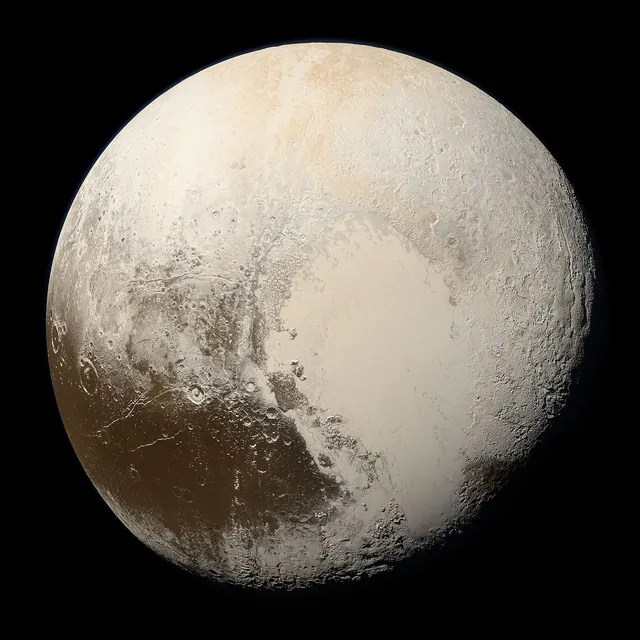 Plutodwarf planetHaumeaelongated dwarf planetMakemakedistant dwarf planetErisdistant dwarf planet